
Plasticware
PTFE, HDPE, PP and PMMA labware for chemical resistance, storage and sample handling. Browse bottles, racks, petri dishes, cryogenic storage and liquid-handling consumables.
Showing 1–12 of 60 results

12 slots plastic pipette stand
$15.00 Select options This product has multiple variants. The options may be chosen on the product page
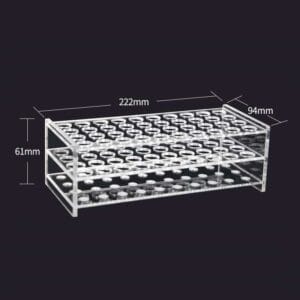
30 slots Test tube stands, PMMA
Price range: $24.00 through $29.00 Select options This product has multiple variants. The options may be chosen on the product page39-Slot PMMA Pipette Stand
$42.00 Select options This product has multiple variants. The options may be chosen on the product page40 slots stand for 10 ml sample vials, plastic PP
$16.00 Select options This product has multiple variants. The options may be chosen on the product page40 slots Test tube stand, PMMA
Price range: $28.00 through $35.00 Select options This product has multiple variants. The options may be chosen on the product page40-Slot PP Vial Stand for 20ml Vials, 28mm Slot Diameter
$19.00 Select options This product has multiple variants. The options may be chosen on the product page50 slots stand for 4 ml sample vials, plastic PP
$12.00 Select options This product has multiple variants. The options may be chosen on the product page50-Slot PMMA Sample Vials Stand
Price range: $21.00 through $34.00 Select options This product has multiple variants. The options may be chosen on the product pageAcrylic Centrifuge Tube Rack, Clear PMMA Tube Holder
Price range: $11.97 through $26.90 Select options This product has multiple variants. The options may be chosen on the product pageBrown HDPE wide mouth bottles,capacity 50 ml to 2.000 ml
Price range: $12.00 through $18.00 Select options This product has multiple variants. The options may be chosen on the product pagePlasticware, Sample Containers
Centrifuge tube with stopper, PTFE, 5 ml to 100 ml, Screw Cap
Price range: $19.90 through $43.99 Select options This product has multiple variants. The options may be chosen on the product pagePlasticware, Sample Containers
Centrifuge tubes, EP plastic, capacity 0.1 to 100 ml, 30 to 1.000 pcs/pack
$29.27 Select options This product has multiple variants. The options may be chosen on the product page




Showing 1–12 of 60 results
Plasticware buying guide
Plasticware is chosen by chemical resistance first, then by temperature and transparency. PTFE is inert to almost all chemicals and is used for digestion vessels, stopcocks and parts that contact aggressive reagents. HDPE resists acids and bases and is the usual material for wide-mouth bottles. PP tolerates autoclaving at 121 °C and is common for racks, stands and disposable labware. PMMA is clear but softens with many solvents.
Storage items are sized by volume and neck type; racks and stands are sized by the tube or vial diameter and slot count. Check both when matching a rack to a tube — a 28 mm slot does not hold a 16 mm vial.
Cryogenic boxes and vials are rated for −196 °C and are supplied with colour-coded inserts for sample organisation.
Frequently asked questions
Which plastic resists the most chemicals?
PTFE. HDPE handles most acids and bases; PP is fine for aqueous work and autoclaving; PMMA is not solvent resistant.
Can PP items be autoclaved?
Yes, standard PP labware tolerates 121 °C. HDPE should not be autoclaved.
How do I match a rack to my tubes?
By slot diameter and count, not nominal volume. A 28 mm slot does not hold a 16 mm vial.
Do you supply PTFE digestion vessels?
Yes — PTFE vessels for Mars6 and similar microwave digestion systems are listed under Sample Containers.
